

Introduction to Serverless Computing on Azure
What is Serverless Computing?
Serverless computing represents a revolutionary approach to cloud application development that’s changing how businesses build and deploy software. Despite its name, serverless doesn’t mean there are no servers – it means you don’t have to worry about them anymore.
At its core, serverless computing eliminates the burden of infrastructure management from developers’ shoulders. When building applications on Azure’s serverless platform, you’re freed from provisioning, configuring, and maintaining the underlying servers. Gone are the days of calculating capacity requirements, setting up virtual machines, and managing operating systems or patches.
Instead, the Azure cloud platform automatically handles all these infrastructure concerns behind the scenes. The platform provisions the necessary computing resources when your code needs to run, scales them seamlessly as demand fluctuates, and then scales back down when usage decreases – all without any manual intervention.
This architectural shift allows development teams to focus exclusively on what matters most: writing code that delivers business value. Developers can pour their energy into creating features and solving problems rather than managing server configurations or worrying about infrastructure reliability.
While servers still exist in the physical world running your code, the entire management layer becomes essentially invisible to you as a developer. You simply write functions that respond to specific events, and Azure takes care of running them in the right environment at the right time.
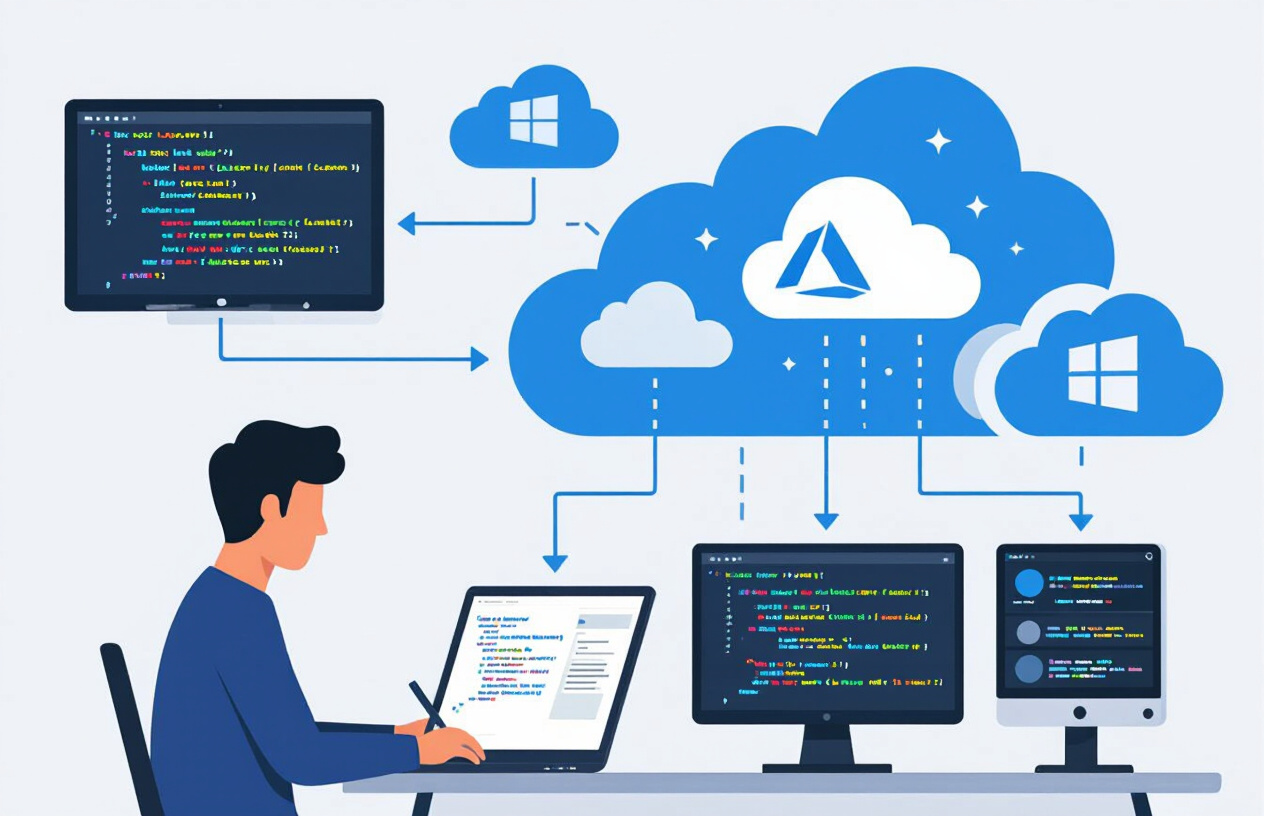
Key Benefits: Cost Reduction and Agility
The serverless approach delivers two crucial advantages that businesses increasingly can’t afford to ignore: dramatic cost savings and remarkable operational agility.
From a financial perspective, serverless computing introduces a true pay-as-you-go model that eliminates waste. You’re billed only for the exact computing resources your application consumes while code is actually executing – down to the millisecond. This means no more paying for idle servers waiting for traffic that might never come. For applications with variable or unpredictable workloads, this can slash infrastructure costs dramatically compared to constantly running virtual machines or containers.
Beyond cost efficiency, serverless architectures significantly boost organizational agility. Development cycles accelerate because teams can develop and deploy individual functions independently without worrying about complex infrastructure dependencies. This modular approach enables faster iterations, easier experimentation, and ultimately a quicker time to market for new features or entire applications.
The dynamic scalability of serverless is perhaps its most powerful advantage.
 Your application automatically scales up to handle traffic spikes within seconds – whether you need to serve 10 requests or 10 million. Just as importantly, it scales back down immediately when demand decreases, ensuring you never overpay during quiet periods.
Developer productivity gets a substantial boost as well. By removing infrastructure management from their daily concerns, your technical teams can dedicate more time to innovation and business-critical tasks. This shift from operational maintenance to feature development can transform how quickly your organization delivers value.
This efficient resource utilization ultimately allows businesses to reallocate both financial and human resources toward accelerating innovation rather than maintaining infrastructure – a critical advantage in today’s fast-moving digital landscape.
Azure Serverless Services and Their Advantages
Core Serverless Services on Azure
Microsoft Azure offers a robust suite of serverless computing options that work together to create powerful, scalable solutions without the headache of infrastructure management.
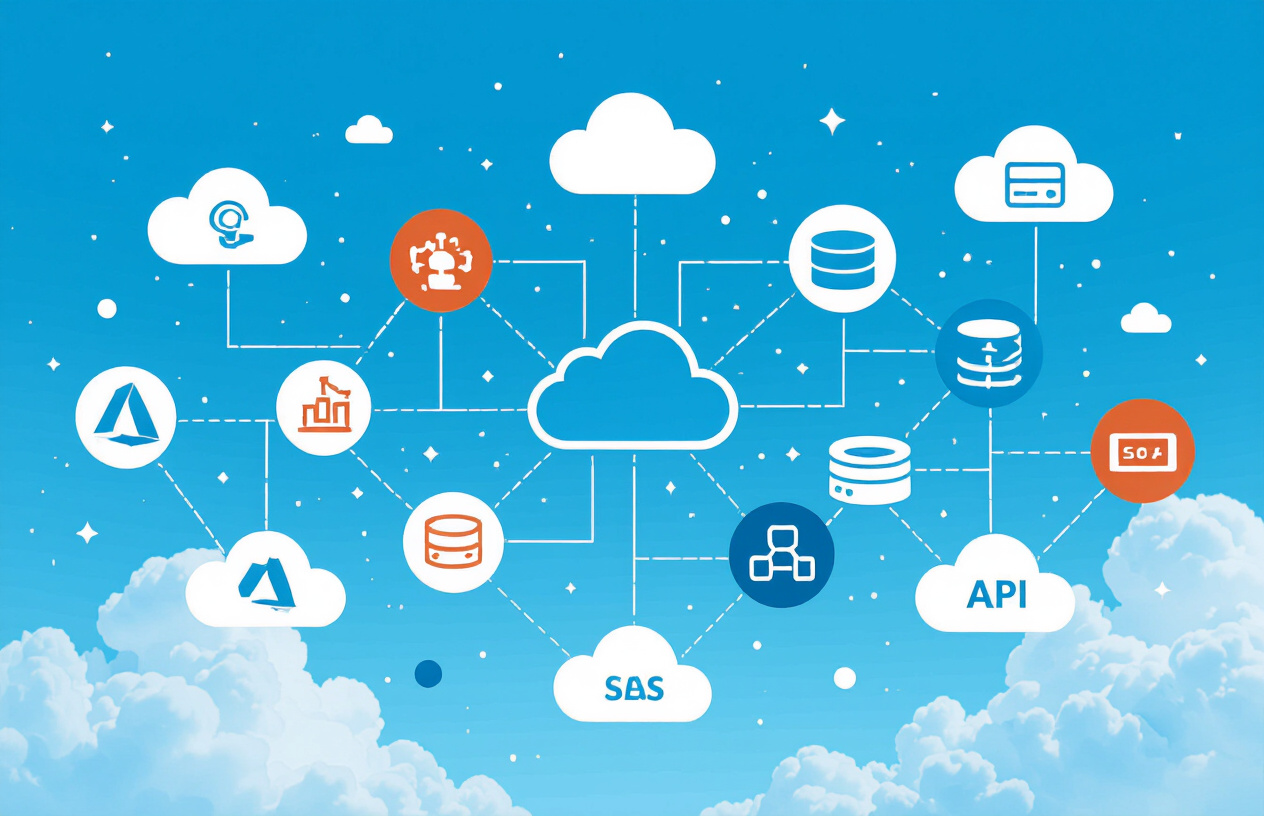 Each service plays a unique role in building modern applications:
Azure Functions stands as Azure’s flagship Function-as-a-Service (FaaS) offering. It lets developers write code that responds to events without worrying about the underlying infrastructure. You can code in your language of choice—C#, JavaScript, Python, Java, or PowerShell—and only pay when your function executes. This makes it perfect for microservices, data processing, and IoT scenarios where workloads vary unpredictably.
Azure Logic Apps takes a visual approach to application integration. With its low-code/no-code interface, you can build workflows that connect disparate systems through a vast library of connectors. Business analysts and developers alike can automate processes spanning Office 365, Dynamics 365, and hundreds of third-party services without extensive coding knowledge.
Azure API Management serves as the gateway between your APIs and the outside world. It provides a unified facade for your backend services while adding critical security layers, usage quotas, and analytics. This service transforms how organizations expose their digital assets, making it easier to monetize APIs and control access.
Azure Event Grid functions as the nervous system for serverless applications. It routes events from various sources to appropriate handlers with near-real-time delivery. Unlike traditional messaging systems, Event Grid is purpose-built for event-driven architectures, making it simpler to build reactive applications that respond instantly to changes.
Serverless Kubernetes with AKS virtual nodes bridges the container world with serverless benefits. It allows you to deploy pods without provisioning VMs, scaling containers instantly during traffic spikes while paying only for actual pod execution time. This approach combines Kubernetes flexibility with serverless economics.
Boosting Agility with Azure Serverless
Azure’s serverless platform dramatically accelerates development cycles in multiple ways:
Teams achieve faster time to market through streamlined deployment processes that eliminate infrastructure setup delays. Code can move from development to production in minutes rather than days or weeks, giving businesses competitive advantages in rapidly changing markets.
Developer velocity increases as teams focus exclusively on application logic instead of infrastructure maintenance. This shift frees up to 40% of developer time previously spent managing servers, networking, and scaling concerns.
The seamless integration capabilities between Azure services create a unified ecosystem where components work together naturally. This eliminates integration bottlenecks that typically slow development progress.
Organizations gain enhanced agility through quick experimentation. New features can be deployed, tested, and rolled back with minimal risk, encouraging innovation and faster iteration cycles.
Team performance improves as the fully managed platform handles routine operational tasks like patching, monitoring, and scaling. This removes cognitive load from development teams, allowing them to concentrate on delivering business value.
Reducing Costs with Azure Serverless
The financial benefits of Azure serverless computing are compelling:
- The pay-as-you-go model means you’re charged only for actual execution time measured in milliseconds. Your billing stops completely when your code isn’t running, unlike traditional servers that accumulate costs 24/7.
- Eliminating idle resource costs represents significant savings, especially for applications with variable or unpredictable workloads. Many organizations report 30-40% reductions in their overall cloud spend after moving to serverless architectures.
- Reduced operational overhead translates to fewer staff hours dedicated to infrastructure management. This creates opportunities to reallocate IT personnel to higher-value activities that drive business growth.
- Optimized resource utilization happens automatically as services scale precisely to match demand. You never overprovision “just in case” or face performance issues from under-provisioning.
- Some organizations report potential savings up to 50% on infrastructure costs when fully embracing serverless architectures, particularly for workloads with intermittent usage patterns.
Developer Tools and Enhancements
Azure’s serverless platform comes with robust developer tooling that enhances productivity:
- Local debugging and visual debug history simplifies troubleshooting by allowing developers to step through code execution and view historical runs. This shortens the feedback loop during development.
- Deployment slots enable blue-green deployments where code can be tested in production-like environments before swapping to live traffic, dramatically reducing deployment risks.
- CI/CD integration with Azure DevOps creates automated pipelines that test, build, and deploy serverless applications with minimal human intervention, ensuring consistent quality.
- Support for multiple programming languages lets development teams use their existing skills and preferred technologies rather than forcing them to learn new languages.
- Built-in intelligence through Azure Cognitive Services and Machine Learning makes it straightforward to add AI capabilities like image recognition, text analytics, and predictive models without specialized data science expertise.




Let’s Make Things Happen
Connect with Our Experts for Personalized Consulting at SmartNet Software
“Our team of seasoned consultants is ready to engage in one-on-one sessions to address your specific needs and guide you through tailored solutions. Together, we can strategize and elevate your business objectives, providing personalized insights and expertise to help you achieve success.”